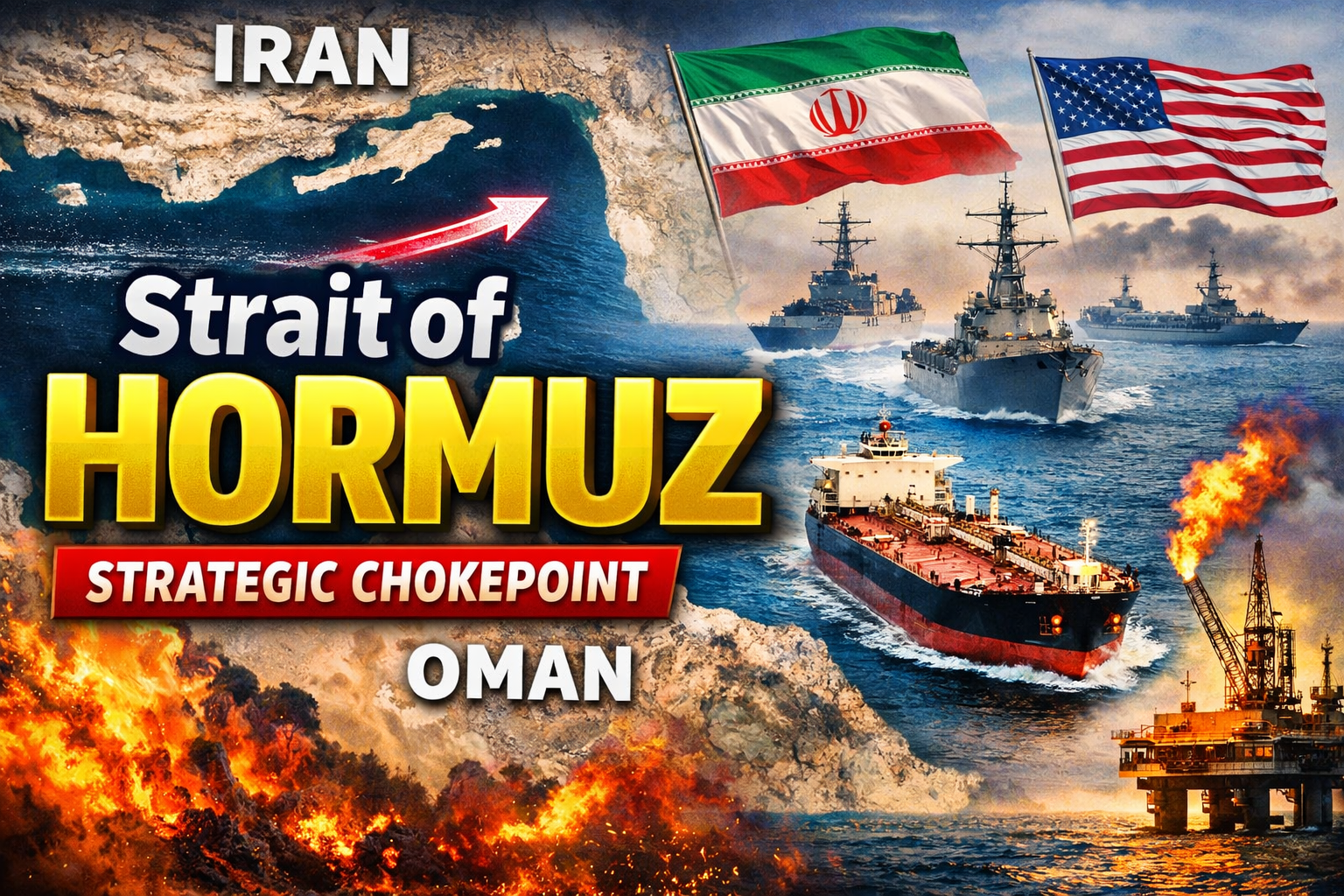
Strait of Hormuz in Current Affairs
Strait of Hormuz in Current Affairs: Why This Strategic Waterway Matters to the World


Introduction
The Strait of Hormuz has once again become a major topic in current affairs and global news due to rising geopolitical tensions in the Middle East. This narrow but extremely important waterway plays a crucial role in the global oil trade and energy security. Any disturbance in this region can affect oil prices, international shipping routes, and the world economy.
Located between Iran and Oman, the Strait of Hormuz connects the Persian Gulf with the Gulf of Oman, which leads to the Arabian Sea. Due to its strategic position, the strait has become one of the most important maritime chokepoints in the world.
What is the Strait of Hormuz?
The Strait of Hormuz is a narrow sea passage that serves as the main route for transporting oil from the Persian Gulf to international markets. At its narrowest point, the strait is only about 33 kilometers wide, with shipping lanes even smaller.
Despite its small size, it handles a massive amount of global energy trade. Nearly 20% of the world’s oil supply passes through this route every day. Because of this, the strait is often described as the lifeline of global oil transportation.
Major oil-producing countries such as Saudi Arabia, Iraq, Kuwait, and the United Arab Emirates depend heavily on this route to export their oil and natural gas to global markets.
Why the Strait of Hormuz is Important in Current Affairs
The Strait of Hormuz frequently appears in international news and geopolitical discussions because tensions in the region can threaten global energy supply. In recent years, conflicts and diplomatic disputes involving Iran and the United States have raised concerns about the security of the strait.
Iran has occasionally warned that it could block or restrict shipping in the Strait of Hormuz if sanctions against it intensify. Such statements have alarmed many countries because a disruption in the strait could severely affect global oil supply.
To ensure safe navigation, several countries have deployed naval forces in the region. Military patrols and international maritime coalitions are working to protect commercial vessels and maintain the free flow of trade.
Impact on the Global Economy
The Strait of Hormuz is vital not only for Middle Eastern countries but also for major energy-importing nations around the world. Countries in Asia, including India, China, Japan, and South Korea, rely heavily on oil shipments passing through this route.
If the strait were blocked or disrupted, the immediate result would be a sharp rise in global oil prices. Higher oil prices could lead to increased transportation costs, inflation, and economic instability in many countries.
Because of these risks, governments and international organizations closely monitor developments in the region. Maintaining stability in the Strait of Hormuz is essential for global economic security and an uninterrupted energy supply.
Conclusion
The Strait of Hormuz remains one of the most strategically important waterways in the world. Its role in global oil transportation makes it a key focus of international politics, security strategies, and economic discussions.
As tensions continue in the Middle East, the security of this narrow maritime route will remain crucial for maintaining stability in global energy markets. Ensuring safe passage through the Strait of Hormuz is therefore essential not only for regional peace but also for the smooth functioning of the world economy.













Post Comment